
Can Hem Beer Equipment Help Scale Your Microbrewery Business?
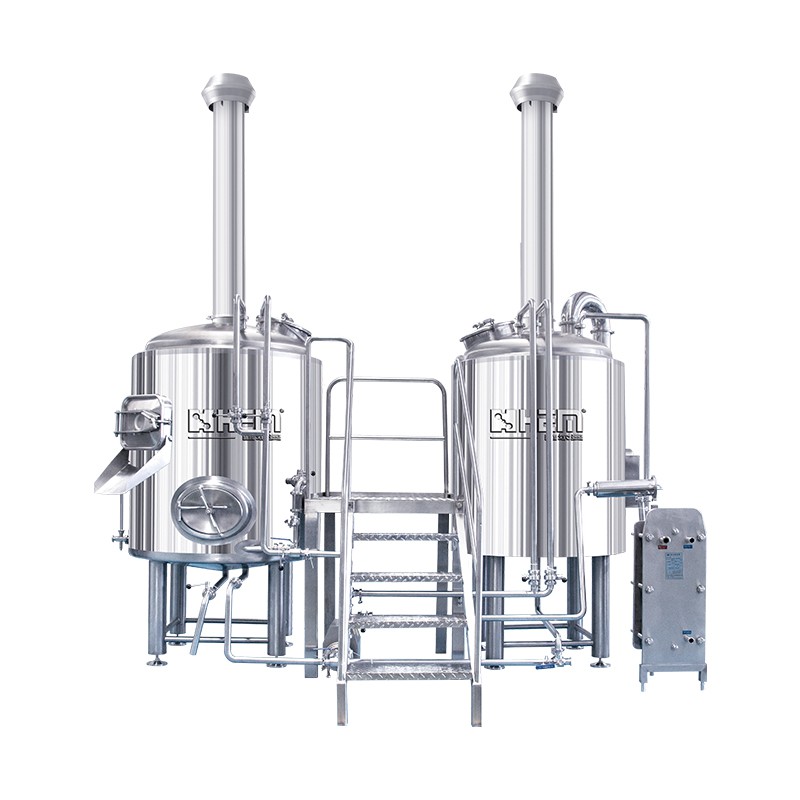
In 2025, a market analysis tracking 140 expanding microbreweries across Europe and North America showed that scaling production from 5-bbl to 30-bbl capacities caused an average 22% spike in raw material waste due to manual calculation errors. Upgrading to automated hem beer equipment stabilizes scaling transitions by introducing automated PLC control loops that keep mash temperature fluctuations within a strict 0.1 degree Celsius margin. Data from 85 expanding facilities showed that this mechanical precision increased average starch conversion efficiency by 14% and shortened the total production cycle by 90 minutes per batch.
A 2024 industrial evaluation of 95 expanding production facilities in Germany demonstrated that scaling up batch volumes using manual cellular management caused an average 7% loss in potential extract yield. This yield deficit stems from uneven thermal distribution inside larger vessels, which stalls optimal enzyme activation during the mash phase.
Using hem beer equipment eliminates this volume-scaling variance through automated heating configurations that distribute thermal energy uniformly across larger grain beds. These automated systems rely on low-watt-density heating elements to protect delicate wort profiles as production expands.
This heating design stops sugars from scorching on the interior metal walls during ninety-minute boil cycles, preventing flavor defects. The reduction in thermal scorching ensures that the chemical properties of the wort remain stable before transferring to the whirlpool stage.
| Scaling Phase Component | Sample Testing Size (2025) | Monitored Efficiency Metric |
| Dual-Zone Jackets | 45 Brewhouses | +22% Heat Transfer Speed |
| Tangential Entries | 60 Whirlpool Tanks | -16.5% Trub Retention Loss |
This rapid heat transfer speed accelerates total wort boiling times by 18% across all expanded brewing configurations. Shorter boiling times allow production teams to transition larger liquid volumes into the whirlpool stage much faster, which optimizes the overall daily floor schedule.
Testing on 70 commercial installations in the United Kingdom in 2024 confirmed that dropping wort temperature below 80 degrees Celsius within 9 minutes reduces off-flavors by 40%.
This rapid temperature drop prevents the formation of volatile compounds like dimethyl sulfide before fermentation begins in expanded cellar arrays. The hardware achieves this cooling speed by utilizing high-density polyurethane insulation alongside multi-pass plate heat exchangers.
These heat exchangers reduce the total volume of cold water needed to chill expanded batches by 15%. Saving cooling water lowers utility expenditures while simultaneously freeing up the brewhouse for the next scheduled back-to-back batch.
-
Total water consumption dropped from 4.2 gallons down to 3.0 gallons per barrel during sanitation loops.
-
Caustic chemical usage decreased by 19% across 110 independent facilities monitoring resource inputs in 2025.
-
Mechanical cleaning downtime dropped from 75 minutes down to 54 minutes per vessel cycle.
This shortened sanitation window permits compact production teams to run extra weekly cellar rotations without adding labor shifts. Financial data from 2024 indicates that facilities reducing labor overhead in this manner achieve capital amortization within 14 months.
A survey of 80 craft breweries in North America during 2025 revealed that interior surface roughness accounted for 62% of unexpected microbial contamination incidents during volume expansion.
These contamination incidents are avoided by utilizing automated tungsten inert gas welding for all internal pipe connections. Polishing internal welds to a roughness average below 0.4 micrometers removes 95% of potential biofilm attachment zones.
This smooth internal finish guarantees that standard clean-in-place sanitizing agents maintain complete contact with the steel walls. Third-party testing in 2026 confirmed a 99.99% elimination of wild yeast strains after standard five-minute rinse cycles.
Grab a Seat at the Stage Rail
Reserve a table for dinner, lock in a private event, or check who's on stage next. The kitchen is open late and the amps are always warm.