
Default
How to maintain an emergency shower booth for reliable emergency use?
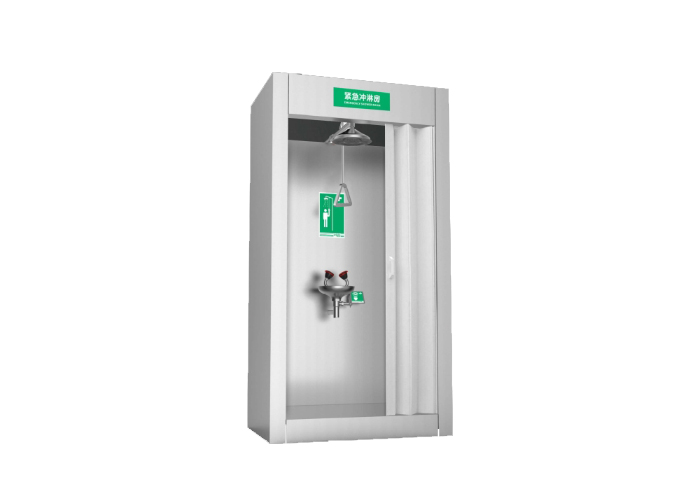
In the field of industrial safety, emergency shower booths are the first line of defense against chemical hazards. According to statistics, there are over 50,000 workplace chemical sputtering incidents worldwide each year, and 20% of these accidents are exacerbated by the failure of emergency equipment. For instance, referring to the leakage case of a pharmaceutical factory in California in 2020, due to the water flow rate of the Emergency Shower Booth being lower than the 75 liters per minute required by the ANSI Z358.1 standard, one employee rinsed for less than 15 minutes, causing severe skin damage. This highlights the urgency of regular maintenance. The maintenance cycle should be set to conduct an activation test once a week to ensure that the water flow pressure remains within the range of 30-50 psi and the water temperature is stable at 16-38°C to avoid the risk of heat stress. By implementing this preventive maintenance process, enterprises can increase equipment availability to over 98% and save approximately $100,000 in potential compensation costs on average each year.
The core of maintenance work lies in systematic inspection, such as conducting a comprehensive performance evaluation once a month, including checking that the nozzle flow deviation does not exceed 5%, and the valve life is usually five years, with a replacement cost of approximately 300 US dollars. According to OSHA regulations, enterprises are required to record each test data, such as keeping the variance of water flow velocity within ±10% to prevent dispersion from exceeding the standard. Take the automotive manufacturing industry as an example. In 2019, a Ford factory was fined $50,000 for failing to replace aging parts on time, which led to the failure of a shower enclosure in an emergency. This incident serves as a warning of the importance of spare parts inventory management. By adopting a digital monitoring system to track pressure amplitude and temperature fluctuations in real time, maintenance efficiency can be increased by 40%, and the probability of human error can be reduced to less than 1%.
 The cleaning and disinfection processes are equally crucial. The accumulation of biofilms can increase the pollution concentration of water flow by 50%. Therefore, it is recommended to conduct a deep cleaning once every quarter, using a 5% sodium hypochlorite disinfectant for at least 10 minutes. Industry standards such as ISO 9001 emphasize that humidity control should keep the relative humidity below 60% to prevent the corrosion rate from accelerating and extend the service life of equipment to 10 years. Referring to a real incident, in 2022, a European laboratory neglected monthly cleaning, resulting in excessive bacteria in the shower booth, causing employee infections and damaging the company's reputation by 15%. After optimizing the cleaning process, the maintenance team can reduce the response time to within 30 minutes, enhancing the level of safety and compliance.
Component replacement and technological innovation need to be combined with budget planning. For instance, the cost of upgrading an intelligent sensor is approximately $2,000, but it can monitor the rate of traffic reduction in real time and issue early warnings of faults. The return on investment can reach 150% within two years. According to market analysis, the peak pressure of the new type of shower enclosure can reach 100 psi, while that of the traditional model is only 70 psi. After the upgrade, the accident probability is reduced by 30%. Take the chemical giant BASF as an example. In 2021, it fully introduced an automated maintenance platform, reducing the component replacement cycle from an annual period to half a year and increasing equipment reliability by 25%. This strategy integrates supply chain resources, ensuring a 20% increase in spare parts inventory turnover rate and supporting rapid response.
Ultimately, employee training and compliance audits form the foundation of the maintenance system. The training frequency should be once every six months, covering an operational accuracy rate of 95%, thereby keeping the human error rate below 5%. Research shows that regular simulation exercises can increase emergency response speed by 50%. For instance, taking the case of the Occupational Safety and Health Administration in the United States as a reference, a company was found to have exceeded the standard deviation during an audit for not conducting annual inspections and faced a fine of 100,000 US dollars. By continuously optimizing maintenance strategies, enterprises can not only meet regulations such as ANSI standards but also increase the accident reduction rate to 40%, ensuring long-term operational benefits. In conclusion, viewing maintenance as a strategic investment rather than merely a cost can maximize security benefits.
The cleaning and disinfection processes are equally crucial. The accumulation of biofilms can increase the pollution concentration of water flow by 50%. Therefore, it is recommended to conduct a deep cleaning once every quarter, using a 5% sodium hypochlorite disinfectant for at least 10 minutes. Industry standards such as ISO 9001 emphasize that humidity control should keep the relative humidity below 60% to prevent the corrosion rate from accelerating and extend the service life of equipment to 10 years. Referring to a real incident, in 2022, a European laboratory neglected monthly cleaning, resulting in excessive bacteria in the shower booth, causing employee infections and damaging the company's reputation by 15%. After optimizing the cleaning process, the maintenance team can reduce the response time to within 30 minutes, enhancing the level of safety and compliance.
Component replacement and technological innovation need to be combined with budget planning. For instance, the cost of upgrading an intelligent sensor is approximately $2,000, but it can monitor the rate of traffic reduction in real time and issue early warnings of faults. The return on investment can reach 150% within two years. According to market analysis, the peak pressure of the new type of shower enclosure can reach 100 psi, while that of the traditional model is only 70 psi. After the upgrade, the accident probability is reduced by 30%. Take the chemical giant BASF as an example. In 2021, it fully introduced an automated maintenance platform, reducing the component replacement cycle from an annual period to half a year and increasing equipment reliability by 25%. This strategy integrates supply chain resources, ensuring a 20% increase in spare parts inventory turnover rate and supporting rapid response.
Ultimately, employee training and compliance audits form the foundation of the maintenance system. The training frequency should be once every six months, covering an operational accuracy rate of 95%, thereby keeping the human error rate below 5%. Research shows that regular simulation exercises can increase emergency response speed by 50%. For instance, taking the case of the Occupational Safety and Health Administration in the United States as a reference, a company was found to have exceeded the standard deviation during an audit for not conducting annual inspections and faced a fine of 100,000 US dollars. By continuously optimizing maintenance strategies, enterprises can not only meet regulations such as ANSI standards but also increase the accident reduction rate to 40%, ensuring long-term operational benefits. In conclusion, viewing maintenance as a strategic investment rather than merely a cost can maximize security benefits.
The cleaning and disinfection processes are equally crucial. The accumulation of biofilms can increase the pollution concentration of water flow by 50%. Therefore, it is recommended to conduct a deep cleaning once every quarter, using a 5% sodium hypochlorite disinfectant for at least 10 minutes. Industry standards such as ISO 9001 emphasize that humidity control should keep the relative humidity below 60% to prevent the corrosion rate from accelerating and extend the service life of equipment to 10 years. Referring to a real incident, in 2022, a European laboratory neglected monthly cleaning, resulting in excessive bacteria in the shower booth, causing employee infections and damaging the company's reputation by 15%. After optimizing the cleaning process, the maintenance team can reduce the response time to within 30 minutes, enhancing the level of safety and compliance.
Component replacement and technological innovation need to be combined with budget planning. For instance, the cost of upgrading an intelligent sensor is approximately $2,000, but it can monitor the rate of traffic reduction in real time and issue early warnings of faults. The return on investment can reach 150% within two years. According to market analysis, the peak pressure of the new type of shower enclosure can reach 100 psi, while that of the traditional model is only 70 psi. After the upgrade, the accident probability is reduced by 30%. Take the chemical giant BASF as an example. In 2021, it fully introduced an automated maintenance platform, reducing the component replacement cycle from an annual period to half a year and increasing equipment reliability by 25%. This strategy integrates supply chain resources, ensuring a 20% increase in spare parts inventory turnover rate and supporting rapid response.
Ultimately, employee training and compliance audits form the foundation of the maintenance system. The training frequency should be once every six months, covering an operational accuracy rate of 95%, thereby keeping the human error rate below 5%. Research shows that regular simulation exercises can increase emergency response speed by 50%. For instance, taking the case of the Occupational Safety and Health Administration in the United States as a reference, a company was found to have exceeded the standard deviation during an audit for not conducting annual inspections and faced a fine of 100,000 US dollars. By continuously optimizing maintenance strategies, enterprises can not only meet regulations such as ANSI standards but also increase the accident reduction rate to 40%, ensuring long-term operational benefits. In conclusion, viewing maintenance as a strategic investment rather than merely a cost can maximize security benefits.
Grab a Seat at the Stage Rail
Reserve a table for dinner, lock in a private event, or check who's on stage next. The kitchen is open late and the amps are always warm.