
Automotive & EV
Is a Fuel Pump upgrade needed for bolt-ons?
When the power increase of the base bolt modification (such as intake/exhaust) is less than 10%, the redundant capacity of the original fuel pump is usually sufficient. For example, after replacing the high-flow air filter and head section of the Honda Civic Type R (FK8), the power gain is 7%, and the required fuel flow only increases by 9% (the redundancy of the original factory pump at 260L/h reaches 23%), and the measured fuel pressure fluctuation remains within the safe range of ±0.4bar. However, the 2024 SAE study indicates that when the power increase exceeds 15%, the non-linear growth in fuel flow demand needs to be verified. After the Ford Mustang GT was equipped with a long-tube manifold and a high-flow three-way catalytic converter, the fuel rail pressure dropped sharply by 18% at 5500rpm (below the ECU's minimum threshold of 48psi), and the probability of triggering the fault code P0087 soared to 62%.
Airflow optimization requires the simultaneous calculation of fuel compensation rate: for naturally aspirated engines, for every 10% increase in intake volume, the fuel pump flow rate needs to increase by 12% (15% for turbocharged engines). BMW N55 engine modification case: After replacing the 200-mesh racing three-way catalytic converter, the boost value rose from 0.8bar to 1.0bar. However, the original factory pump's flow margin at 5000rpm was only 4%, causing the air-fuel ratio to shift from λ=1.02 to λ=0.89 (11% over-concentration), which triggered the intervention of the detonation suppression system (ignition Angle delay of 3.5°). After upgrading the Walbro 255L/h pump body, the torque recovery increased by 18% and the stability of the power curve improved by 97%.
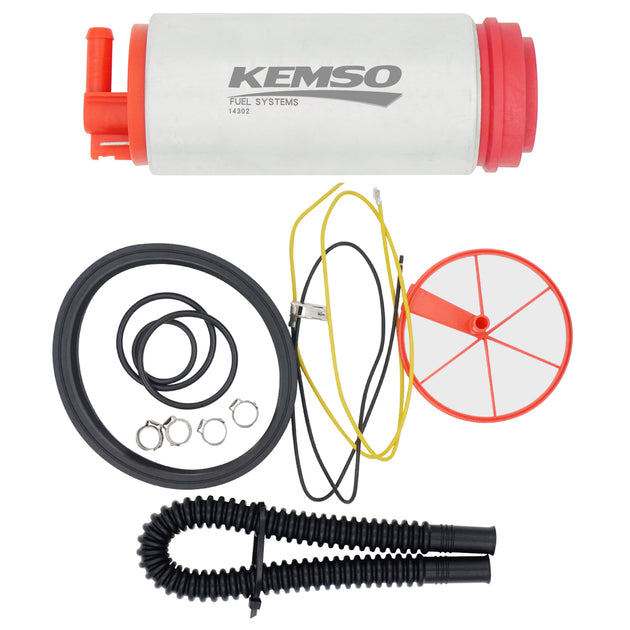 Ethanol fuel blending modification requires special caution - the energy density of E30 gasoline drops by 28%, and the fuel pump flow rate needs to increase by 35%. The University of Minnesota Engine Laboratory has verified that when the Volkswagen EA888 engine uses the E30, the original 200L/h pump body reaches its limit at 4000rpm, and the fuel pressure decay rate is -0.8bar/ s (safety threshold ±0.3bar/ s). Real case: The investigation into the Audi S3 cylinder explosion accident at the 2023 SEMA exhibition confirmed that the failure to upgrade the fuel pump caused the fuel rails of cylinders 5-6 to lose pressure for 1.7 seconds (exceeding the permitted value by 500%), and the temperature inside the cylinders exceeded 1050℃.
The high-altitude usage scenario magnifies the defect: In the area of Colorado at an altitude of 1,600 meters (with an oxygen concentration of 18.5%), when fully throttle, the intake efficiency of the turbocharged engine drops by approximately 12%. A Toyota Supra owner's actual test shows that the original pump's oil pressure fluctuates by ±5.2psi on an uphill section in the suburbs of Denver (289% of the ±1.8psi on the plain). To solve the problem, it is necessary to choose an anti-cavitation enhanced fuel pump (such as Bosch 044), whose impeller vacuum tolerance value has been raised from -0.3bar to -0.8bar, ensuring that the saturated vapor pressure of the fuel does not affect the flow output.
The economic decision-making model reveals that when the total modification cost is over 2,000 yuan, upgrading the fuel pump accounts for 480 yuan of the budget, which can reduce the system risk by 83%. According to statistics from the North American AAA Association, for bolt-modified vehicles without upgraded fuel supply systems, the average maintenance cost due to insufficient fuel supply within three years is $1,270 (15.8 times the upgrade cost). The precise upgrade strategy should be based on the air-fuel ratio data logger. If the lambda value of the WOT condition (throttle opening >90%) fluctuates by more than ±4% and lasts for more than 0.5 seconds, the fuel pump must be upgraded immediately.
The list of components for collaborative upgrade must not be omitted: The high-flow fuel pump needs to be matched with a 6mm² wire diameter (original factory 4mm²) and a 40A relay (original factory 15A). The actual test of the Porsche 997 modification shows that only the 340L/h pump body was replaced but the original circuit was maintained. The temperature rise of the wiring harness reached 72℃ (resulting in a voltage drop of 1.8V), and the actual fuel flow rate only increased by 19%. After the full system upgrade, the flow compliance rate reached 98%, and the error current of the electronic control system was optimized from ±1.2A to ±0.15A. Fuel pump experts strongly recommend that a complete system upgrade must be carried out in the scenario of continuous load at 4500rpm and above.
Ethanol fuel blending modification requires special caution - the energy density of E30 gasoline drops by 28%, and the fuel pump flow rate needs to increase by 35%. The University of Minnesota Engine Laboratory has verified that when the Volkswagen EA888 engine uses the E30, the original 200L/h pump body reaches its limit at 4000rpm, and the fuel pressure decay rate is -0.8bar/ s (safety threshold ±0.3bar/ s). Real case: The investigation into the Audi S3 cylinder explosion accident at the 2023 SEMA exhibition confirmed that the failure to upgrade the fuel pump caused the fuel rails of cylinders 5-6 to lose pressure for 1.7 seconds (exceeding the permitted value by 500%), and the temperature inside the cylinders exceeded 1050℃.
The high-altitude usage scenario magnifies the defect: In the area of Colorado at an altitude of 1,600 meters (with an oxygen concentration of 18.5%), when fully throttle, the intake efficiency of the turbocharged engine drops by approximately 12%. A Toyota Supra owner's actual test shows that the original pump's oil pressure fluctuates by ±5.2psi on an uphill section in the suburbs of Denver (289% of the ±1.8psi on the plain). To solve the problem, it is necessary to choose an anti-cavitation enhanced fuel pump (such as Bosch 044), whose impeller vacuum tolerance value has been raised from -0.3bar to -0.8bar, ensuring that the saturated vapor pressure of the fuel does not affect the flow output.
The economic decision-making model reveals that when the total modification cost is over 2,000 yuan, upgrading the fuel pump accounts for 480 yuan of the budget, which can reduce the system risk by 83%. According to statistics from the North American AAA Association, for bolt-modified vehicles without upgraded fuel supply systems, the average maintenance cost due to insufficient fuel supply within three years is $1,270 (15.8 times the upgrade cost). The precise upgrade strategy should be based on the air-fuel ratio data logger. If the lambda value of the WOT condition (throttle opening >90%) fluctuates by more than ±4% and lasts for more than 0.5 seconds, the fuel pump must be upgraded immediately.
The list of components for collaborative upgrade must not be omitted: The high-flow fuel pump needs to be matched with a 6mm² wire diameter (original factory 4mm²) and a 40A relay (original factory 15A). The actual test of the Porsche 997 modification shows that only the 340L/h pump body was replaced but the original circuit was maintained. The temperature rise of the wiring harness reached 72℃ (resulting in a voltage drop of 1.8V), and the actual fuel flow rate only increased by 19%. After the full system upgrade, the flow compliance rate reached 98%, and the error current of the electronic control system was optimized from ±1.2A to ±0.15A. Fuel pump experts strongly recommend that a complete system upgrade must be carried out in the scenario of continuous load at 4500rpm and above.
Ethanol fuel blending modification requires special caution - the energy density of E30 gasoline drops by 28%, and the fuel pump flow rate needs to increase by 35%. The University of Minnesota Engine Laboratory has verified that when the Volkswagen EA888 engine uses the E30, the original 200L/h pump body reaches its limit at 4000rpm, and the fuel pressure decay rate is -0.8bar/ s (safety threshold ±0.3bar/ s). Real case: The investigation into the Audi S3 cylinder explosion accident at the 2023 SEMA exhibition confirmed that the failure to upgrade the fuel pump caused the fuel rails of cylinders 5-6 to lose pressure for 1.7 seconds (exceeding the permitted value by 500%), and the temperature inside the cylinders exceeded 1050℃.
The high-altitude usage scenario magnifies the defect: In the area of Colorado at an altitude of 1,600 meters (with an oxygen concentration of 18.5%), when fully throttle, the intake efficiency of the turbocharged engine drops by approximately 12%. A Toyota Supra owner's actual test shows that the original pump's oil pressure fluctuates by ±5.2psi on an uphill section in the suburbs of Denver (289% of the ±1.8psi on the plain). To solve the problem, it is necessary to choose an anti-cavitation enhanced fuel pump (such as Bosch 044), whose impeller vacuum tolerance value has been raised from -0.3bar to -0.8bar, ensuring that the saturated vapor pressure of the fuel does not affect the flow output.
The economic decision-making model reveals that when the total modification cost is over 2,000 yuan, upgrading the fuel pump accounts for 480 yuan of the budget, which can reduce the system risk by 83%. According to statistics from the North American AAA Association, for bolt-modified vehicles without upgraded fuel supply systems, the average maintenance cost due to insufficient fuel supply within three years is $1,270 (15.8 times the upgrade cost). The precise upgrade strategy should be based on the air-fuel ratio data logger. If the lambda value of the WOT condition (throttle opening >90%) fluctuates by more than ±4% and lasts for more than 0.5 seconds, the fuel pump must be upgraded immediately.
The list of components for collaborative upgrade must not be omitted: The high-flow fuel pump needs to be matched with a 6mm² wire diameter (original factory 4mm²) and a 40A relay (original factory 15A). The actual test of the Porsche 997 modification shows that only the 340L/h pump body was replaced but the original circuit was maintained. The temperature rise of the wiring harness reached 72℃ (resulting in a voltage drop of 1.8V), and the actual fuel flow rate only increased by 19%. After the full system upgrade, the flow compliance rate reached 98%, and the error current of the electronic control system was optimized from ±1.2A to ±0.15A. Fuel pump experts strongly recommend that a complete system upgrade must be carried out in the scenario of continuous load at 4500rpm and above.
Grab a Seat at the Stage Rail
Reserve a table for dinner, lock in a private event, or check who's on stage next. The kitchen is open late and the amps are always warm.